
Mince Pies, Glühwein, and Victorian Nostalgia: The Dutch Dickens Festival
This post is contributed by Ella Staps, a student of English language and literature at Radboud University Nijmegen. Her primary research interests are Metamodernism, dystopian and utopian literature, and memory studies.
Charles Dickens never set foot in the Netherlands. And yet, the country hosts nearly three times as many Dickens festivals in his name as does his native United Kingdom. While both countries celebrate him, they seemingly do so in wildly different ways. Over the past six months, I have traveled to Dutch Dickens Festivals to understand the reason for their popularity. While speaking to visitors, sipping hot chocolate by fire pits, and chatting to organizers, I have tried to figure out the main attraction drawing so many people to these Victorian-themed events. Yet I quickly realized that, whatever the reason was, it was not Dickens’s books.
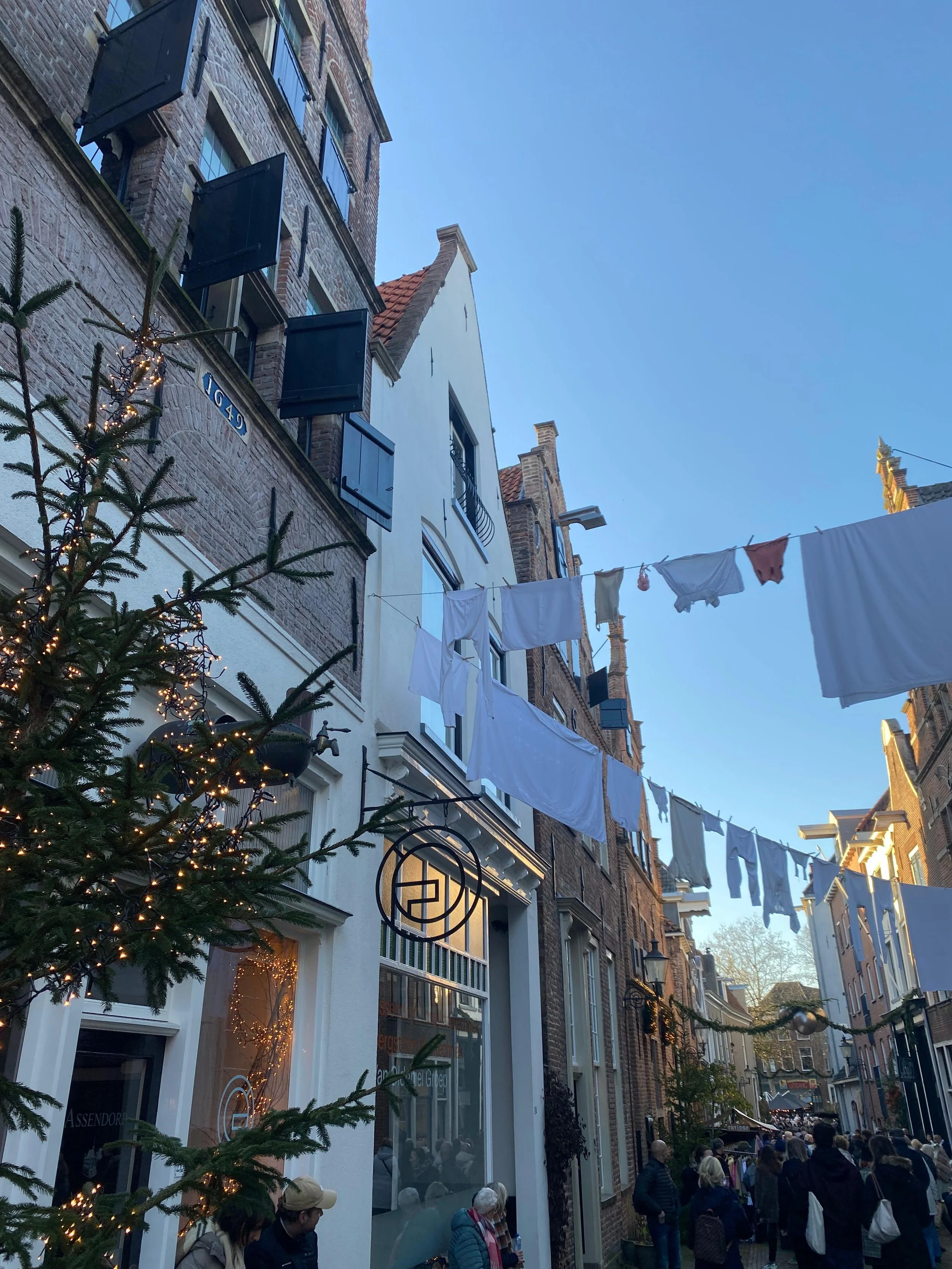
Dickens Festijn Deventer
Only a third of the visitors I had spoken to had actually read Dickens. Most knew of his stories through adaptations or, as one of the visitors described, through “common cultural knowledge.” When visiting Dutch Dickens festivals, one of the questions I asked the visitors was whether they believed the popularity of the festivals had anything to do with Dickens himself and his literature, to which many responded by saying they believed the name “Dickens” created a comfortable placeholder, even if his life and literature were not central to the festival. Most festivals smartly combined a sense of Victorian romanticization and nostalgia with Christmas markets selling glühwein, handmade crafts, and warm food, creating a space where visitors are perhaps partly confronted with Dickens’s stories, but not fully immersed in them. I also observed that none of the festivals seemed to truly engage with Dickens’s storytelling. That Dickens and his literature are not the central focus of these festivals was even further emphasized when I started contacting organizations to inquire how and if Dickens’s life and literature were in any way central to their event. Their responses were quite telling: for most, this was not a priority.
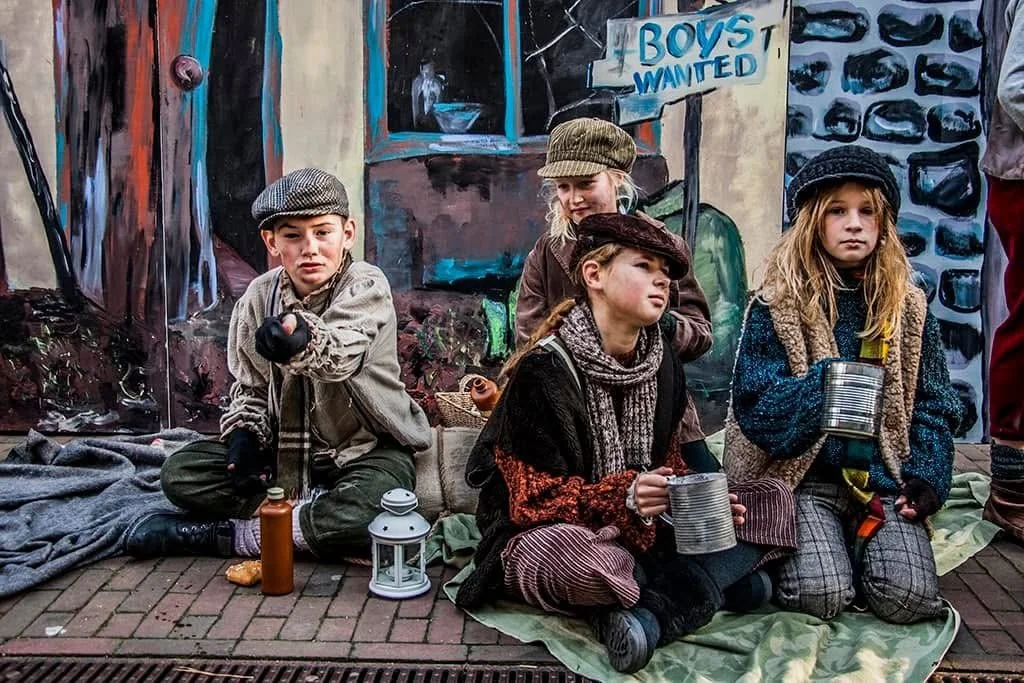
Dickens Festijn Drunen
But there was one festival that truly set itself apart from the others. At Dickens Festijn Deventer – the largest and oldest of the Netherlands – actors did not just wander the streets in costume, but actively guided the visitors through Dickens’s stories, with a special emphasis on A Christmas Carol (1843). This way, the festival became a living adaptation of Scrooge’s literary pilgrimage, as the visitors walked with him through his literary journey. Besides Dickens Festijn Deventer, the Netherlands’ most famous Dickens festival, the country counts twenty-five other active festivals which market themselves as “Dickens Festivals.” Interestingly, the United Kingdom, much larger and more connected to Charles Dickens, only hosts nine active Dickens Festivals. This notable difference, alongside the Netherlands’s common Dickens Festival setup – with the notable exception of Dickens Festijn Deventer – asks the question: Why does Dickens mean something so strikingly different in the Netherlands than in the United Kingdom?
In order to answer this question, I first turned to scholarship on literary festivals. While there is quite little to find on this topic, critics who have commented on it seem to place literary festivals broadly in two distinct categories, namely ones that aim to create authentic sites of literary heritage, and those with a more commercial focus, aiming for seasonal nostalgia with a Dickensian stamp. Regina Gagnier frames these events as mostly economic, as the festival often contains a Christmas market of some kind (726). This way, the festival might partly exist to capitalize on the holiday season, since Dickens is undoubtedly connected to Christmas. This commercial perspective is also discussed by Odin Dekkers, who argues that the combination of Dickens and Christmas creates a profitable combination for event organizers (294). As many visitors told me: Dickens is easily associated with Christmas, and his name seemed to draw more visitors than if the event had been marketed as a more general Victorian Christmas market.
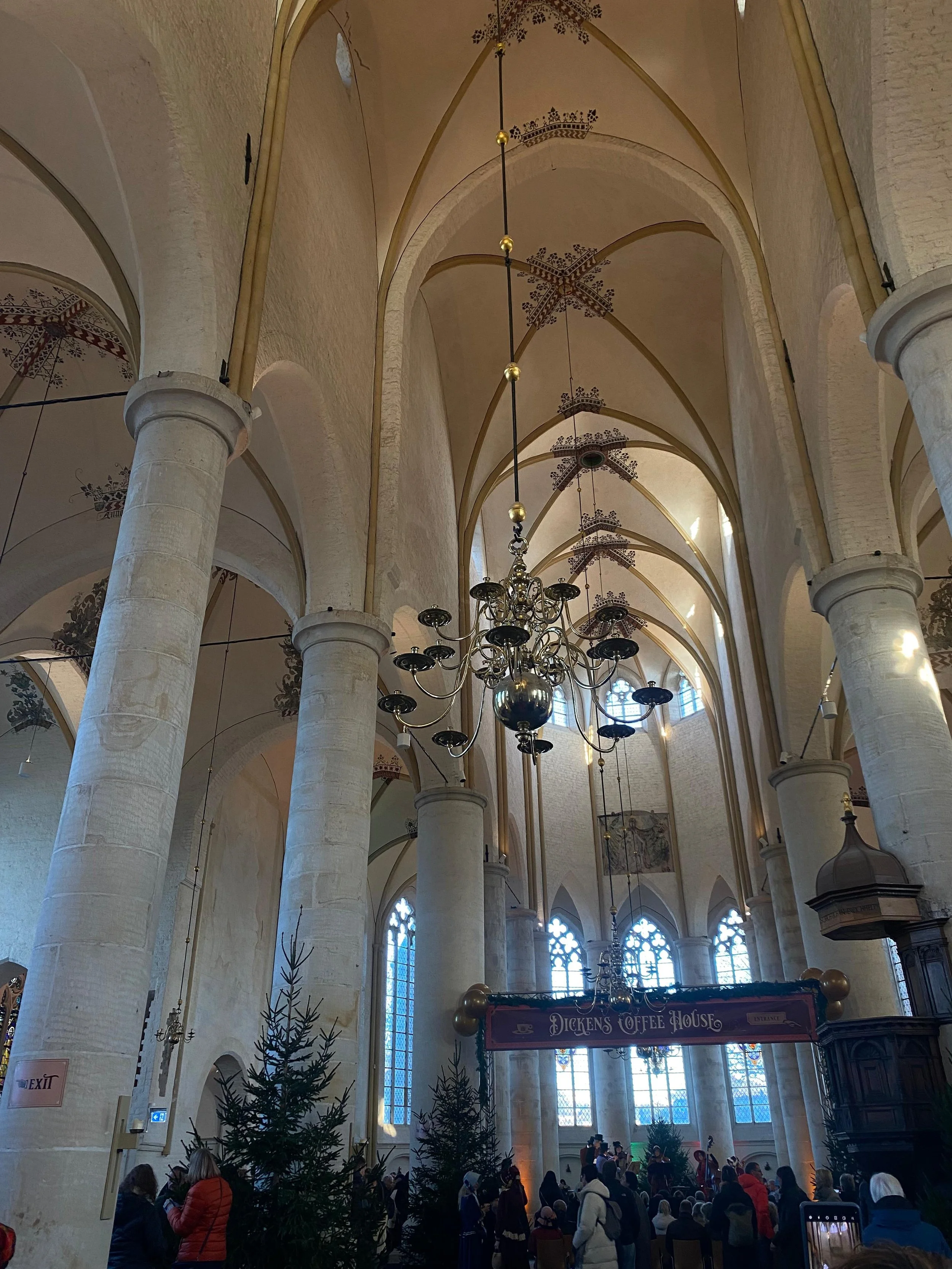
Dickens Festijn Deventer
Relatively large-scale festivals besides Dickens Festijn Deventer openly prioritized commercial opportunity, focusing on the sale of warm drinks, hearty food, and handmade crafts, while the Victorian aesthetic served as more of a backdrop for consumption rather than education. These organizations articulated what visitors already mentioned: the label “Dickens” provides a convenient, recognizable umbrella for broader appeal. Meanwhile, smaller festivals claimed their festivals were more aimed at the goals of community-building and creating more family activities during the winter break.
At first thought, it seemed to me that all Dickens Festivals must be focused on profit instead of literature. However, examining the United Kingdom’s literary festivals created a more nuanced picture. The Rochester Dickens Festival, which Booth mentions, is rooted in a longer cultural association between Dickens and the geographical place, in Kent, where this festival is held (260). Thus, instead of being fully commercialized, the Rochester Dickens Festival serves as a site of heritage tourism. Inherently, the Brits are more connected to Dickens than the Dutch could ever be, as he is a cultural figure from their soil. This was emphasized in the response of the organization when asked how central Dickens’s literature is to the festival, to which they responded with an all-encompassing answer: “Dickens is central to our culture.”
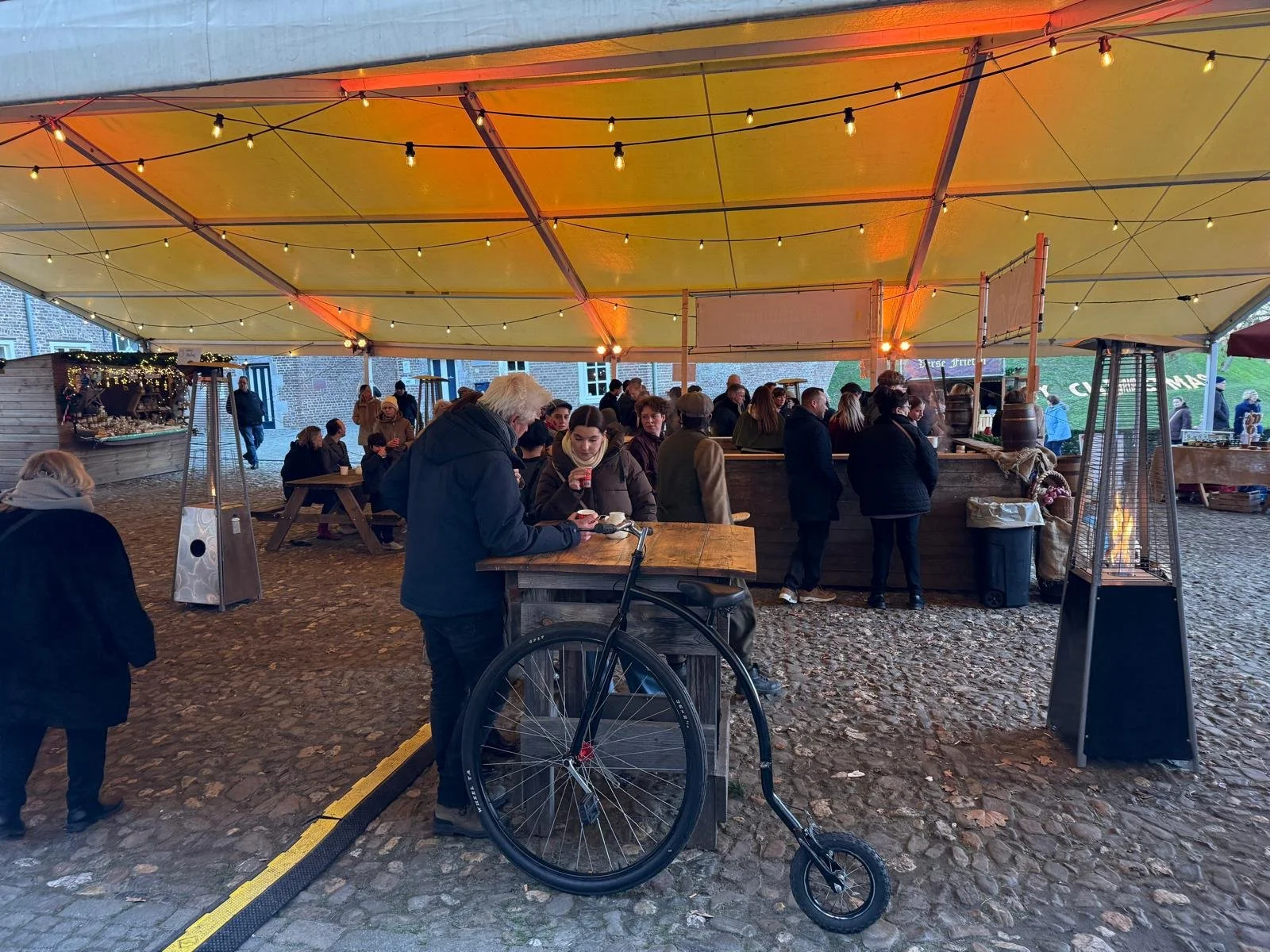
Dickens op het Kasteel: Dickens Festijn Limbricht
Consequently, it seems that the Dickens festivals in the Netherlands are more focused on the revenue that the name “Dickens” seems to create; people know Dickens, and this, in combination with their interest in Victorian times and its characters, costumes, and décor, influences them to visit these festivals. These contrasting contexts suggest that Dickens festivals can serve different purposes, as in the Netherlands, they often operate primarily as Christmas markets dressed up as literary celebrations, whereas in the United Kingdom, they are more closely tied to literary heritage and national cultural memory. Of course, not all Dutch organizers are driven solely by profit, as some spoke passionately about what these festivals have done for their local community by functioning as a project where different age groups work together to create a beautiful setting for the festival. Yet even among these sincere efforts, the underlying pragmatism was perhaps best summarized by one organizer, who, with a knowing smile, asked me: “Who is still reading Dickens anyway?”
Works Cited
Booth, Alison. “Haunting Dickens World.” In Homes and Haunts: Touring Writers’ Shrines and Countries, edited by Alison Booth. Oxford University Press, 2016, pp. 255-280.
Dekkers, Odin. “Dickens’s Reception in The Netherlands.” In The Reception of Charles Dickens in Europe, edited by Michael Hollington. Bloomsbury Academic, 2013, pp. 283-294.
Gagnier, Regina. “Dickens’s Global Circulation.” In The Oxford Handbook of Charles Dickens, edited by Robert L. Patten, John O. Jordan, and Catherine Waters. Oxford University Press, 2021, pp. 722-737.