
This review is contributed by Mads Golding, a playwright, writer, and independent scholar who focuses on Charles Dickens and the long 19th century. She is a staff writer for The Dickens Society.
It appears that when writing a Victorian novel, particularly one set in the 1850s centered on London’s literary circles, it is impossible, or at least wildly unrealistic to avoid dealing with Charles Dickens. Livi Michael’s new novel Elizabeth and Ruth (2026) focuses on Elizabeth Gaskell’s life and writing process immediately preceding the writing of her novel Ruth (1853). She joins Zadie Smith (unintentionally, but pleasingly) in a trend of writing honestly about Victorian women who certainly worked with or around Dickens, without allowing Dickens’s fame to eclipse their stories even if only by association. In this novel, Michael wastes no time in plunging the reader into a visceral, meticulously researched journey through a women’s prison, a brothel, and a sweat shop: ‘Manchester is full of locked up girls in attics and cellars, but attics are better because of the light. You can’t sew without light’ (62).
Gaskell attempts to befriend a young Irish girl named Pasley who has been arrested for a crime, the nature of which is not revealed for several chapters. Readers should be aware that the plot deals explicitly with human trafficking. Each chapter written from Pasley’s perspective is harrowingly specific. There is not a great deal of difference between the stories of the women who resent her and use her and the men who batter her. Between Gaskell’s reactions to her charge, and the young girl’s narrative, it is clear that this is the unvarnished backstory that inspired characters like Nancy with whom Dickens grappled; indeed Gaskell states later on that ‘Dickens has his Nancy’, but the parallels are clear to eagle-eyed readers much earlier on.
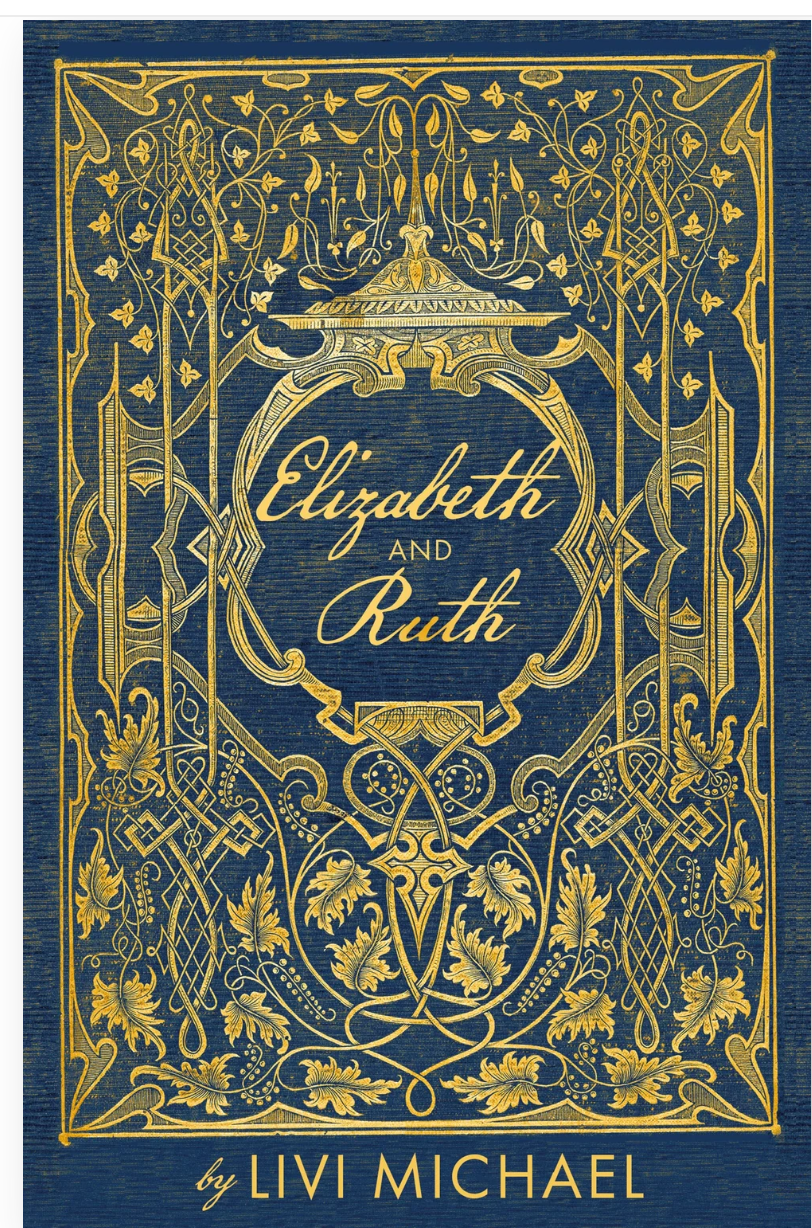
Cover of Elizabeth and Ruth (2026), Salt Publishing.
From Gaskell’s narrative, we get a more broad, sociological perspective available to a person who moves about in the world and has some degree of stability, and therefore, is afforded time and space for reflection:
‘This was the Manchester no one wanted to know. A great, raw, heaving machine of human flesh, teeming with wretchedness. Where moneylenders, sharks, gin peddlers and pimps fed off the poor and the poor fed off each other’ (67). One of Gaskell’s chief goals is to learn as much as possible about her young charge so as to help her improve her situation. Michael doesn’t fall into the trap of treating the interview dynamic as an easy route for exposition. Instead, she switches between the perspectives of the traumatized child: and the author, who is navigating how to offer support without forcing the child into a manufactured intimacy. Therefore, she chooses to give the reader an intimate view of Pasley’s thoughts through flashbacks that the child experiences but cannot express to her interviewer: ‘And then I asked for my wages […] you’d have thought I asked for the moon. “Wages!” She said, and before I could move, her filthy cloth shot out and stung me in the face. “You talk to me of wages!” “She’s not paid any of you!” I cried to them. Mrs. Digby lashed out […] she was shrieking at me like a harpy from hell, how it was she who was owed money for keeping me, and about ingratitude and shame’ (107).
As Pasley shares these stories with the reader she seems conscious that she is the recipient of generations of abusive habits that have been handed down in these psychological bearpits run by embittered women.
She is alarmingly conscious of her abuser’s motivations, explaining that the woman who keeps Pasley and her roommates enslaved is: ‘miserable from hating us’ (118).
Pasley’s early life (childhood is not an appropriate word here) makes her a shrewd social observer and yet her occasional glimmers of childlike hope are heartbreaking, particularly as her relationship with Gaskell carries on over the Christmas period, which brings with it a bittersweet atmosphere of community and temporary warmth. Gaskell clearly struggles with the contradictions of her position, all of which are put under scrutiny. She is hyper-conscious of her various rotating roles: there is the Gaskell whose social and economic privilege permits her to venture into prisons to support the wrongly imprisoned. Then there’s the Gaskell who has lost a son in early childhood and who, despite having delivered a vibrant group of young daughters, still deeply grieves the loss of her firstborn. Then there’s the Gaskell who works as a Sunday school teacher; like all good teachers, she notices patterns and infers student struggle:
‘She wanted to show Dr. Kay that these children weren’t in gangs on the street or suffering from some unmentionable disease passed on by their parents. The parents were good, decent people, who wanted their children to have different horizons from themselves’ (92).
Still, those horizons are far enough away that the children must often fend for themselves:
‘Each child returned to their seat equipped with a lollipop and a bar of soap. Some of the boys were waving them about, others seemed mystified. A few would be calculating what they could swap them for in the streets’ (92).
It appears that working with Pasley gives Gaskell a new perspective on the diversity of experience among her own students. When the project of rescuing Pasley from impending homelessness feels overwhelming, she returns to her work within the Victorian education system sector, but she knows she is not in a position to enact widespread social reform overnight.
One constant source of tension throughout the novel appears as Gaskell tries to balance philanthropy with motherhood, and her grief, all while navigating the English class system that both reveres charity as a high form of religious practice, but which must necessarily subjugate those in receipt of that charity in order to profit off their labor. Both Elizabeth and her husband, William, an affluent preacher, spend most of their waking hours enacting their religious callings to the best of their abilities. Ironically, it is often her devout husband who brings her back to earth by reminding her that the grossly unfair interlocking systems they are dealing with are designed to extract energy, not to replenish it:
‘“Gets in way of justice, William was saying”
“What does?”
‘Charity. It saves the government the effort of doing what should be done”’ (224).
Dickens’s influence is felt in the last third of the novel when Gaskell writes to him in context of their shared charitable efforts:
‘My Dear Mrs. Gaskell,
I am very much afraid I cannot help you in the distressing case you describe. I assist Miss Coutts in the management of her “Home” and have, at all times, a great deal to do with it. […] I therefore feel that Miss Coutts would not like to take responsibility of the girl.
We have no matron to send out with them because of the nature of the voyage. I doubt Miss Coutts’ inclination to admit her as she is not altogether a helpless outcast. However, as I have said, I will see in the course of the day, whether we can do anything in the matter.
Faithfully yours,
Charles Dickens’ (229).
This is a revealing admission which shows that many charities would only assist those who are absolutely desperate. Because Pasley is connected with Gaskell, she does not qualify for support from another charitable body.
The letter offers a new perspective on Dickens for many readers who will likely know him for A Christmas Carol (1843), setting up Dickens as an external philanthropic social force, separate from his writing career. The choice to write about Gaskell as the 19th century equivalent of a social worker also shows the reader how hard it was (and remains) for a working mother, even one from a moderately influential one, to make time to push their writing career forward in the face of pressure to prioritize family life and support her husband’s public image. Gaskell is initially reluctant to reach out to Dickens for support because of their brief yet fiery editorial relationship. Michael alludes to the literary collaboration between the two giants, but because the details of the feud are never expanded upon, Dickens’s opinions of Gaskell’s writing are left out of the narrative entirely and therefore have no influence over the reader’s perception of her writing.
Nevertheless, Michael acknowledges that Dickens’s fame and connections put him in a position to be potentially supportive to Gaskell. Thus, Michael preserves Gaskell’s literary autonomy in relation to Dickens, while exploring their potential financial relationship.
Michael clearly decides that this story is about a very successful middle-class female writer who keeps a constant eye on the gutter she feels she herself narrowly escaped.
This novel presents a poignant, emotional, often dark portrait of a titan of Victorian literature for whom life, art, and politics become irreversibly intertwined.
For all its historical accuracy, this is a thoroughly contemporary novel.
Work Cited
Michael, Livi. Elizabeth and Ruth. Salt Publishing, 2026.